One certificate for code review and visual QA
Reviewing the diff is half the job. The other half is the running app. Here is why ShipGuarde folds both into a single verdict you can gate a release on.
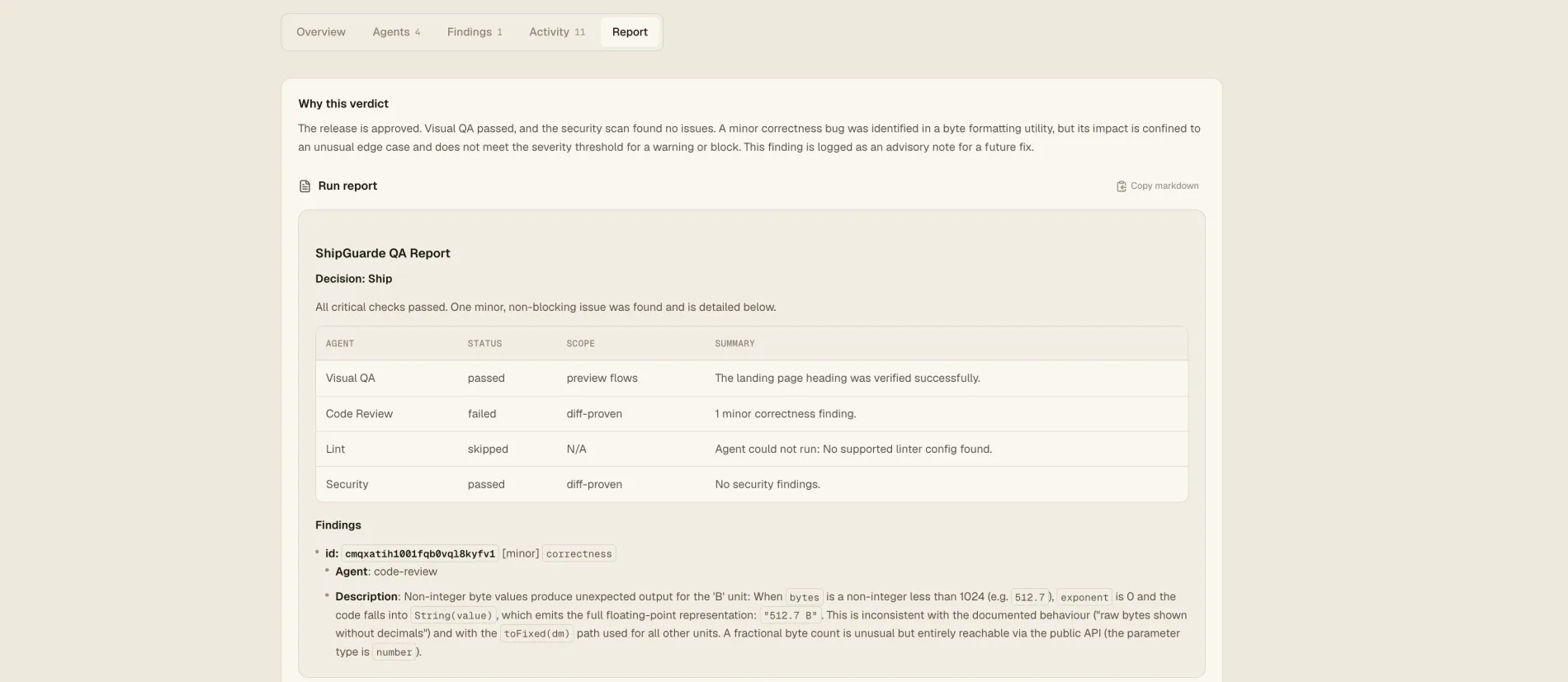
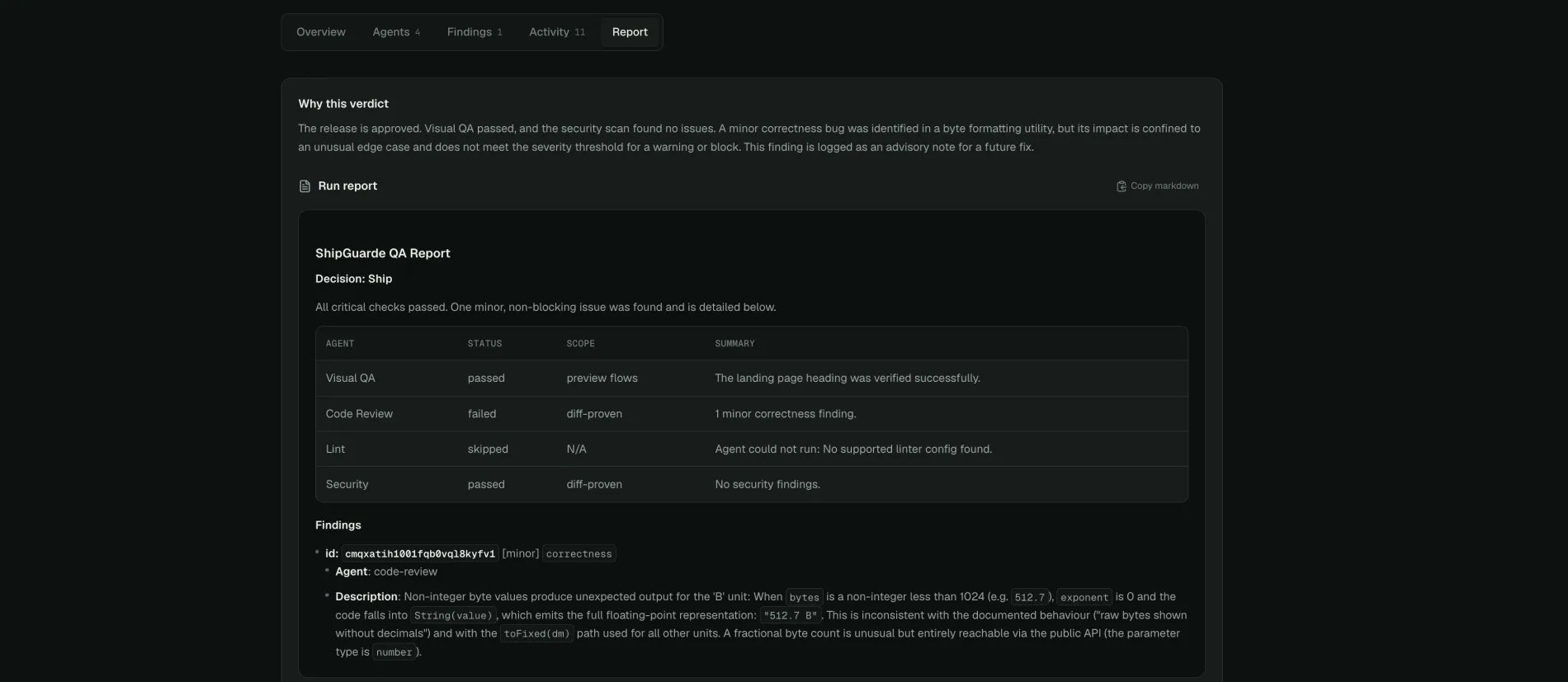
Most review tools stop at the diff. But your users never see the diff. They see the running app. ShipGuarde was built around that gap: two registers of examiners, one signature.
Two registers#
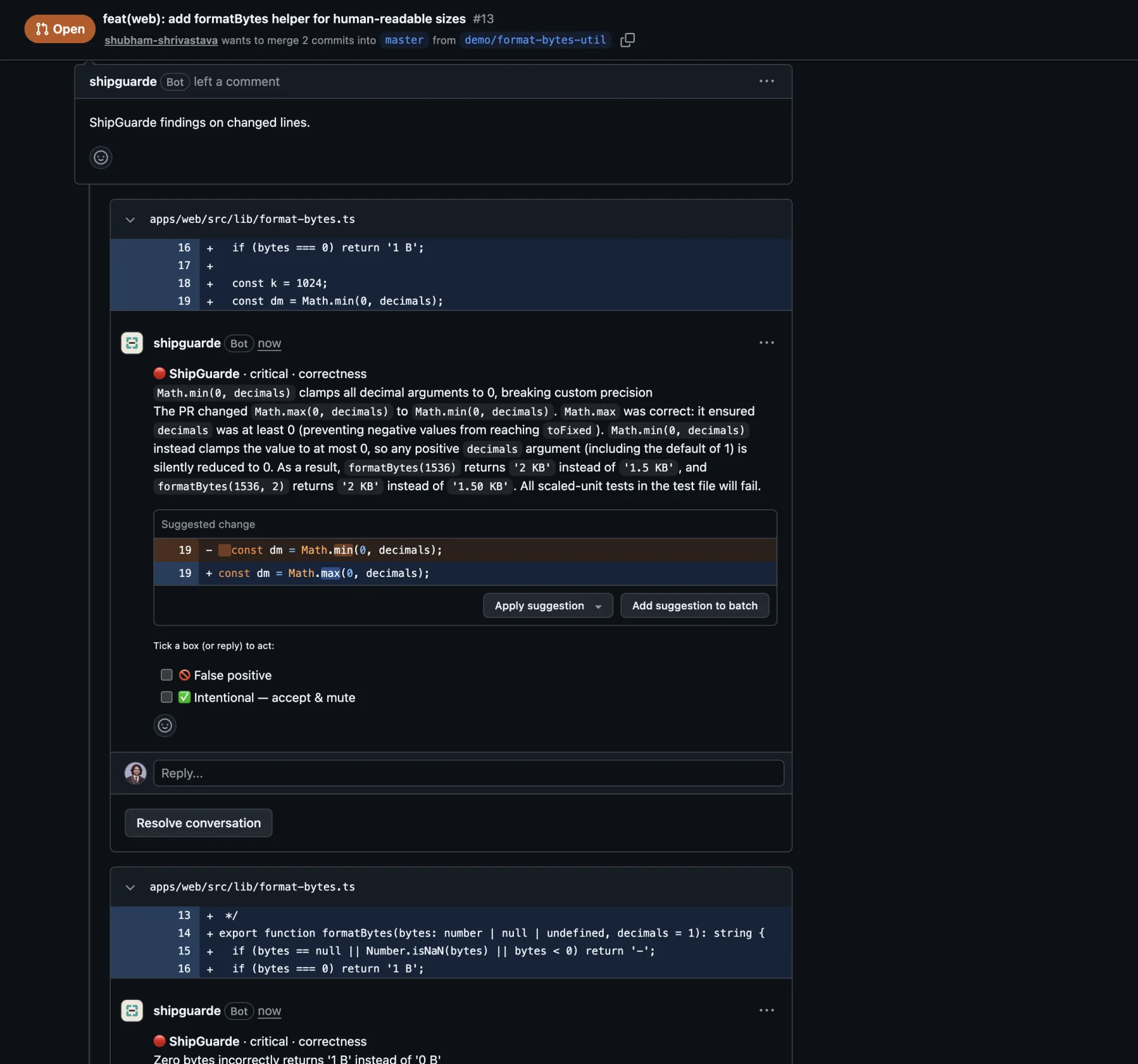
The first register reads your pull request. It looks for the correctness, security, and contract bugs your change introduces, scoped to the lines you actually changed, and it leaves comments on the exact line with a committable fix where it can.
The second register drives your live app on any URL, the way a person would. It grounds on what is visible on the screen rather than CSS selectors, so a flow survives a redesign. While it navigates, a whole panel inspects:
- console errors and failed requests,
- accessibility, contrast, and focus order,
- performance budgets like LCP and CLS,
- SEO and metadata, broken links, and layout defects.
One signature#
The point of two registers is not two reports to reconcile. Both co-sign a single clearance: cleared to ship, ship with notes, or release denied. One decision, in plain English, with the reasons attached. It is the thing your PM reads and the thing branch protection can require.
You decide what it means#
A denial is advisory until you say otherwise. Turn it into a required, failing check per repository or from CI when you want the gate, and keep it as a signal when you do not. The certificate is always issued; whether it holds a merge is your call.
Why it matters#
Shipping got faster than checking it. Folding code and the live app into one verdict is how you get a sign-off you trust enough to gate a release on, without stitching together a code reviewer, a browser test suite, and a room full of manual QA. One filing. One ruling.